


12.9 C
Athens
Saturday, March 14, 2026

A Greek speaking blog for gadget enthusiasts!

Αρχική Blog Σελίδα 3

CES 2026 Smart Locks: The Shift Toward Hands‑Free Home Entry

Smart Locks @ CES 2026

CES 2026 Smart Locks: The Shift Toward Hands‑Free Home Entry

Trendline: CES 2026 makes one thing clear: smart locks are moving beyond “phone unlock” and toward truly hands-free entry—while trying to stay secure, auditable, and family-friendly.

What “hands-free” really means in 2026

Hands-free entry doesn’t just mean unlocking without a key. It’s a bundle of improvements:

  • Smarter presence detection: recognizing when an authorized person is near the door
  • Better alerts: fewer noisy notifications; more relevant “this matters” events
  • Cleaner integrations: locks that actually cooperate with lights, cameras, and alarms
  • Reliability upgrades: faster response, longer battery life, clearer status indicators

The security tradeoff: convenience vs control

Every time a lock becomes “easier,” it risks becoming “looser.” The best direction at CES 2026 is not unlocking by default, but unlocking intelligently—paired with strong fallback options and transparent logs.

Look for these features to separate serious locks from flashy demos:

  • Activity logs: who unlocked and when
  • Granular permissions: temporary codes for guests, deliveries, cleaners
  • Two-factor for critical changes: especially for adding new users
  • Offline operation: lock should still work even if Wi‑Fi goes down

Matter and interoperability: what to watch

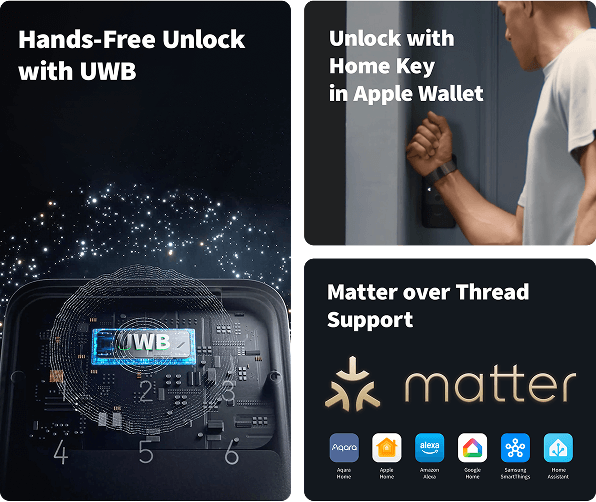
As Matter adoption grows, buyers increasingly expect a lock to work across ecosystems. The question isn’t only “Does it support Matter?” but “Which features are exposed through Matter vs locked to a vendor app?”

Practical advice: If you care about cross-platform control, confirm which functions work in your preferred platform (Google, Apple, Amazon, Samsung) and which require the manufacturer’s app.

Buying checklist for 2026

  • Power strategy: how it alerts you before battery dies
  • Physical override: key backup or protected emergency method
  • Auto-lock behavior: configurable delay + geofencing options
  • Weather resistance: especially for exposed doors and humid climates

Bottom line: CES 2026 smart locks are getting more seamless, but the best products are the ones that keep the user in charge—through logs, permissions, and predictable behavior.


Samsung Ballie at CES 2026: The Rolling Home Robot Gets Smarter

Samsung Ballie @ CES 2026

Samsung Ballie at CES 2026: The Rolling Home Robot Gets Smarter

Quick take: Ballie is back in the spotlight at CES 2026, and this time the pitch is less “cute concept” and more “practical home autonomy.” Samsung is positioning Ballie as a mobile smart-home companion that can move where your sensors aren’t, act as a roaming interface for the home, and deliver contextual help that fixed speakers can’t.

What Ballie is (and why it matters)

Ballie is Samsung’s small rolling robot designed to act as a moving hub around your home. Unlike a smart speaker that’s anchored to one room, a rolling device can follow you, observe changing conditions, and respond to what’s happening in real time—whether that’s lighting, door status, temperature, or a “did I leave something on?” situation.

In theory, a home robot bridges a gap that exists in many smart homes today: we have lots of devices, but we still spend time controlling them manually. Ballie’s promise is that it can become a proactive layer—moving to where it’s needed and offering help before you ask.

What’s confirmed from CES 2026 announcements

  • Deeper smart-home integration: Ballie is framed as a controller and assistant for smart devices, not just a novelty robot.
  • Contextual assistance: Expect routines that adapt based on presence, time of day, and what’s happening in the home.
  • Practical autonomy: The messaging is clearly shifting toward real use cases—checking rooms, nudging reminders, and acting as a mobile “status dashboard.”

How Ballie could change daily smart-home life

Most smart homes still suffer from “dashboard fatigue.” You can control everything—but only if you open the right app, find the right screen, and remember the device name. A mobile robot can reduce that friction by meeting you where you are and presenting only what’s relevant in the moment.

For example:

  • Night routine: Ballie detects you heading to bed and verifies doors are locked, lights are off, and the thermostat is set.
  • Remote check-in: You’re out—Ballie patrols specific rooms and reports back if something looks unusual (subject to privacy controls).
  • Family assistance: Reminders for medication schedules, calendars, and location-based prompts (again: only if the user opts in).

Privacy and security: the real make-or-break

Any robot that moves around your home immediately raises questions: What data is captured? Where is it processed? How long is it stored? Can you disable cameras/mics? A “home autonomy” product only works if users trust it.

If Samsung wants Ballie to be more than a CES headline, privacy controls must be:

  • Transparent: clear indicators when sensors are active
  • Configurable: per-room and per-time privacy settings
  • Local-first when possible: on-device processing for sensitive tasks
  • Secure by default: strong account security and encrypted communications

Where Ballie fits in the 2026 smart-home landscape

Smart homes in 2026 are moving toward fewer “point gadgets” and more unified experiences. Consumers want devices that work together without constant maintenance. Ballie’s potential advantage is being a moving interface that can bring coherence to a multi-vendor home—especially if Samsung keeps compatibility broad.

Should you care (or wait)?

If you love smart-home automation, Ballie is one of the most interesting “next-step” ideas because it tries to reduce friction rather than add another app-controlled gadget. But the difference between a product and a concept is reliability, price, and long-term support.

Buyer advice: If Samsung announces consumer availability and pricing, the smartest move is to wait for real-world reviews focused on privacy controls, navigation reliability, and smart-home compatibility.


Lockin V7 Max (AuraCharge): the smart lock that “never needs charging” (and why that matters)

Lockin V7 Max
Lockin V7 Max

The smart-lock problem nobody loves talking about

Smart locks are popular for guest codes, auto-lock, remote unlock, audit logs.
But most households quietly fight:

  • Batteries that die at the worst moment.
  • Easy-to-ignore low-battery alerts.
  • Cold weather that drains cells even faster.
  • Rechargeable packs that add cost and another cable.

Hard-wiring fixes it—yet many doors can’t be modified. Solar is flaky on shaded porches.
If a brand removes charging friction without an electrician, that’s not a feature—it’s a category unlock.

What Lockin announced at CES 2026

PCMag nominates the Lockin V7 Max for Best of CES and details its power trick:

  • AuraCharge wireless optical charging.
  • Plug a transmitter within 13 ft of the lock.
  • Eye-safe IR beams hit a receptor on the inside escutcheon.
  • Two global safety certs back the “eye-safe” claim.

Engadget confirms the same IR-beam trick for both the flagship V7 Max and a cheaper Veno Pro model.

Why optical charging is bigger than it sounds

Qi pads need touching; AuraCharge works across a doorway:

  1. 13-ft range—no pad, no dock, no alignment.
  2. Trickle-maintenance goal: keep the cell topped so you never think about it.

If real-world range and efficiency hold, it kills the #1 smart-lock failure mode: battery neglect.

The lock is more than a power demo

Per PCMag the V7 Max also packs:

  • Dual exterior cameras (doubling as a doorbell).
  • Touchscreens inside and outside.
  • Unlock via face, palm, fingerprint, PIN, app.
  • On-device AI for face / event recognition.

You’re buying a lock + video doorbell + biometric terminal—i.e., a big security surface.

The trade-off: convenience expands attack surface

Always-powered is great—until it’s always-powered for attackers too. Ask before you buy:

  • Local or cloud processing for video/biometrics?
  • Can recording be disabled while locking still works?
  • Is an account mandatory?
  • Security-patch cadence and support window?

Coverage hasn’t answered these yet; insist on answers before pre-ordering.

Price and the “realistic buyer”

Lockin told PCMag the V7 Max could hit $1,300 when it ships this summer; AuraCharge will also appear on a $350 Veno Pro.
That positions the Max for:

  • security-first homeowners,
  • premium smart-home enthusiasts,
  • short-term rental hosts who need 100 % uptime.

The cheaper model matters—optical charging has to drop below flagship pricing to become a standard, not a luxury flex.

Bottom line

Lockin V7 Max isn’t interesting because it adds another unlock method—it’s interesting because AuraCharge tries to erase the maintenance tax that keeps smart locks from feeling truly smart. If the IR power link stays reliable and security defaults are tight, this could be the most influential smart-home idea out of CES 2026.

Roborock Saros Rover: the stair-climbing robovac finally makes multi-floor cleaning plausible

Roborock Saros @CES 2026

The core problem robot vacuums haven’t solved

Robot vacuums are “smart” in the sense that they map rooms, avoid obstacles, and schedule cleanings. But they remain fundamentally limited by one primitive constraint: gravity and stairs.
For multi-story homes, a robovac often becomes:

  • a single-floor helper (usually the most-used level), or
  • a device you manually relocate like a fancy broom with a battery.

That’s why stair-climbing robovacs show up every CES in concept form. Most never become a product you can imagine trusting around furniture, kids, and pets.

What Roborock showed at CES 2026

PCMag highlights the Roborock Saros Rover as a standout smart-home product precisely because the “robot legs” approach provides “a distinct usability advantage” over typical robovacs: it can climb stairs and clean as it climbs.
PCMag’s on-the-floor description is unusually specific:

  • The legs operate independently, raising and lowering each side as needed.
  • They help the vacuum clear obstacles and navigate slopes.
  • While climbing steps, one leg stays on the step below as a brace while the rest of the vacuum slides along to clean the staircase.

Engadget’s CES roundup also notes Roborock’s approach: the Saros Rover pushes itself upward on extendable legs to reach higher floors, and those legs can help it raise itself over obstacles on floors too.

Why “legs” are more than a gimmick

Robovac add-ons often chase novelty: a mop pad here, a small arm there. PCMag explicitly contrasts the Saros Rover legs with last year’s arm trend, suggesting legs are more directly useful.
That tracks with real homes:

  • Thresholds, toys, low furniture edges, and uneven rugs are daily annoyances.
  • Stairs are the “hard boundary” that prevents full-home automation.

If a robovac can reliably climb and descend stairs, it changes the product category from “single-floor cleaner” to “home cleaning system.”

Practical implications: mapping, safety, and trust

A stair-climbing robovac isn’t just a vacuum with a new mechanical part. It needs:

  • Stair detection that fails safe: a fall down a staircase isn’t just a broken vacuum; it can damage walls, injure pets, or cause noise at night.
  • Navigation confidence: the device needs to know not only where it is, but what it’s standing on, and how stable each move will be.
  • Cleaning strategy: cleaning stairs is different from cleaning a flat floor. The geometry changes and so does debris behavior.

The most convincing part of PCMag’s report is the “clean as it climbs” detail. That implies this is not merely “transit legs” that carry a vacuum between floors; the cleaning function remains central.

Who this is for (and who should wait)

Best fit:

  • Homes with 2+ floors where the vacuum already “earns its keep” on one floor.
  • People with mobility limitations who benefit from not carrying a vacuum up and down.
  • Busy households where the biggest pain point is coverage, not suction.

Wait-and-see:

  • Households with narrow stairs, delicate stair runners, or cluttered landings.
  • Anyone who wants proven reliability before paying early-adopter pricing.

As with many CES devices, pricing and wide availability are often the missing pieces at show time. The key is whether Roborock can productize this without making it fragile or prohibitively expensive.

Bottom line

Roborock Saros Rover is one of those CES announcements that’s easy to overhype—but it targets the most meaningful unmet need in robovacs: multi-floor autonomy. If real-world reliability holds up, this is the first time “stair-climbing robot vacuum” feels like more than a demo trick.

Lego Smart Brick: Most smart & Interactive Toy to present

Lego Smart Brick

Lego’s Smart Brick is a standard-sized brick with embedded electronics—sensing motion/orientation and playing contextual audio—designed to make physical play react in real time to what kids *actually do*, not just what an app tells them to do. Bravo Lego!

What was announced (and what’s actually new)

CES is full of “toy-tech” concepts that look flashy in a demo and disappear. Lego’s Smart Brick is different because it’s built around a simple but powerful idea:keep the play physical, keep the logic inside the bricks, and let interaction emerge from how kids build and move things.

According to Engadget’s CES roundup, Lego introduced the Smart Brick as a standard-sized brick with a 4.1mm ASIC chip inside, built to respond differently depending on the set and how you’re building it. Lego describes a “Play Engine” and integrated copper coils that allow each brick to sense motion, orientation, magnetic fields, and its relationship to other Smart Bricks, including distance and direction. Each brick also contains a tiny speaker for audio that’s “tied to live play actions,” not just pre-recorded clips on a timer.

Source: Engadget

The Verge’s CES live hub also highlights the Smart Brick as a standout of the show, calling it “electronics-packed,” and links out to deeper coverage and demos.

Source: The Verge

Why this matters: toy “interactivity” usually cheats

Most interactive toys are either:

1) App-first (the phone drives the story; the toy is a prop), or

2) Trigger-based (press a button; a sound plays; repeat).

Smart Brick pushes toward a third model: system-based play, where the toy reacts to state—how pieces are arranged, moved, oriented, and combined. That’s a much closer match to why Lego works in the first place: kids already treat a Lego build like a programmable world, even without screens. If Lego can keep this reliable and affordable over time, Smart Brick becomes a platform for: – richer role-play (audio and interaction that follows the story the kids invent), – cooperative building (two kids’ builds “talk” to each other), – accessibility (audio cues can support kids who prefer auditory feedback), – and eventually, creator ecosystems (custom behaviors, if Lego opens any portion of the system).

How it works (as described so far)

From Engadget’s reporting:

Sensors & awareness:

Bricks sense motion and orientation, plus magnetic fields, and can detect their relationship to other bricks.

Audio: each brick includes a speaker to play context-aware sound.

Context objects: Lego pairs Smart Bricks with Smart Tags and Smart Minifigures that help bricks understand the “meaning” of what they’re doing in a build.

Local wireless layer: Lego calls the local layer “BrickNet”, which helps smart components coordinate in real time.

Source: Engadget

That local-network detail is quietly important: “smart” toys too often default to cloud connectivity for basic behaviors. A local layer suggests Smart Brick can remain responsive even without Wi‑Fi (though Lego hasn’t fully specified what requires connectivity and what doesn’t).

The first Smart Play sets (pricing and what you get)

Engadget reports the first Smart Play partner is Star Wars, launching three all-in-one sets built around Smart Bricks, Smart Tags, and Smart Minifigures:

– 473-piece Darth Vader TIE Fighter $70

– 584-piece Luke’s Red Five X-Wing $100

– 962-piece Throne Room Duel & A-wing $160

These sets include audio effects like lightsaber swooshes, fighter sounds, and the Imperial March.

Source: Engadget

The Verge’s CES live hub also notes the Smart Brick as a major highlight and includes additional Lego-focused items inside the hub.

Source: The Verge

What a “Smart Brick” could do for learning (without turning into homework)

A lot of edtech mistakes “more tech” for “more learning.” Lego has historically been good at the opposite: *hide the complexity and let kids pull it out naturally.* If Smart Brick stays faithful to that, it can support:

– Cause-and-effect reasoning: “When I rotate this, what happens? What if I move it closer?”

– Systems thinking: behaviors emerge from multiple components interacting.

– Iterative design: kids will naturally rebuild to get different reactions.

– Cooperative play: shared worlds that respond differently depending on who’s doing what.

Crucially, it does this without requiring kids to “code” at age six just so a toy can blink. The “coding” is embedded in how the toy perceives state and emits feedback.

Real-world concerns: durability, battery, and “toy creep”

Because Lego’s Smart Brick is electronics inside a standard-sized brick, there are three practical concerns you should watch as the product reaches homes:

1) Durability & failure modes: Lego bricks are famously durable. Electronics change that equation. What happens after a drop, a bath, or a lost piece?

2) Power & longevity: Smart behavior implies power. Lego hasn’t emphasized battery details in the coverage above; it’s a major question for parents.

3) Privacy: even if BrickNet is local, some companion features may still go online. Parents will want clarity on whether microphones, accounts, or recordings are involved (the Smart Brick itself is described as having a speaker; the articles above don’t describe a mic in the brick).

Bottom line

Lego Smart Brick is notable because it aims to make physical play itself the interface—no “scan this with your phone” gimmicks required. If Lego keeps behaviors local, batteries sane, and the platform extensible across themes, Smart Brick could become one of the few CES “future toys” that actually changes what kids expect from a toy.

error: Content is protected !!