Withings BeamO: The Future of the Home Medicine Cabinet
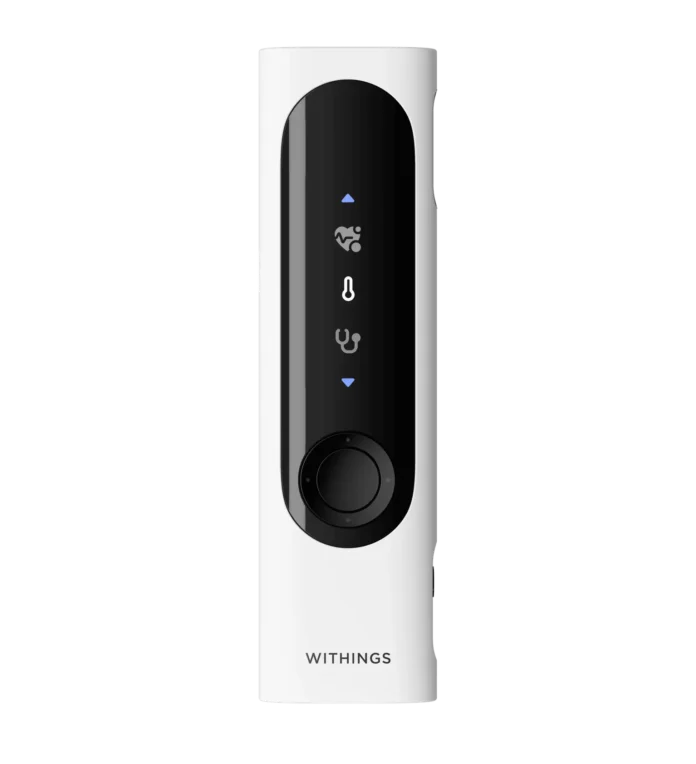
Telehealth just got a massive upgrade at CES 2026. The Withings BeamO is a handheld device that allows you to perform a comprehensive heart and lung checkup from your couch.
What can it measure?
Digital Stethoscope: Captures acoustic heart and lung sounds to share with doctors.
Medical-Grade ECG: Detects atrial fibrillation (AFib) in seconds.
Blood Oxygen (SpO2): Accurate respiratory tracking.
Non-contact Thermometer: Fast and hygienic temperature readings.
The Impact: This device bridges the gap between “wellness tracking” and “clinical monitoring,” making remote doctor visits much more effective.
Sony Challenges Spatial Computing with New XR Headset
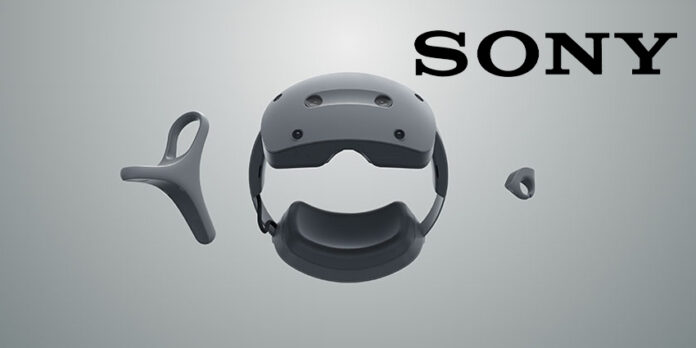
While the world focused on gaming, Sony used CES 2026 to pivot toward Spatial Content Creation. Their new XR headset isn’t just for entertainment; it’s a precision tool for 3D designers and filmmakers.
Key Specifications
Dual 4K Micro-OLED Displays: Offering industry-leading clarity and color accuracy.
Ring Controllers: Unique controllers designed for manipulating 3D objects in real-time.
Snapdragon XR2+ Gen 3: Powering high-fidelity mixed reality passthrough.
Why it matters: Sony is leveraging its expertise in cameras and professional displays to offer a more “pro” alternative to the consumer-focused headsets currently on the market.
Matter 1.4: The Glue Holding CES 2026 Smart Homes Together
For years, the “Smart Home” was a collection of walled gardens. At CES 2026, the Matter 1.4 update is the star of the show, aiming to fix the biggest headache in IoT: making devices from Apple, Google, Amazon, and Samsung actually talk to each other without lag.
What’s New in Matter 1.4?
Enhanced Multi-Admin: Sharing devices between different apps (like Apple Home and Google Home) is now seamless rather than a setup nightmare.
Energy Management: New device types for EV chargers and solar inverters allow your home to automate energy savings based on real-time grid costs.
Better Thread Networking: Improved stability for battery-operated sensors and locks.
The Verdict: Matter 1.4 isn’t just a spec update; it’s a maturity milestone. If you are buying smart gear in 2026, “Matter Certified” is no longer optional—it’s a requirement.
CES 2026 Wearables: New Sensors, Better Insights, and the Data Question
CES 2026 continues the wearable industry’s two-speed evolution: hardware is getting better (more sensors, better battery, more comfort), but the real battleground is interpretation—how devices turn raw signals into health insights you can trust.
What’s changing in wearable health at CES 2026
Across announcements and demos, three themes dominate:
Sensor expansion: more physiological signals captured throughout the day
Context-aware metrics: fewer “generic scores,” more tailored interpretations
Coaching loops: insights that connect to habits (sleep, stress, training load)
Accuracy: the uncomfortable truth
Wearables can be extremely useful, but they’re not all equal. A feature list is not a medical claim. The important questions for any CES 2026 wearable are:
How was the metric validated?
On which demographics and skin tones?
How does it behave during motion (gym, running, cycling)?
What are the known failure cases?
Rule of thumb: the more serious the health claim, the more you should demand transparent validation and cautious language.
Privacy and ownership: health data is the product
Health signals are deeply personal. If a wearable is “free” or heavily discounted, it may be monetizing data indirectly. Even paid devices can share data across vendor ecosystems. Before buying, check:
Export options: can you download your data?
Retention: how long data is stored
Sharing: whether data is used for ads, research, or partners
Account security: 2FA availability
Who should upgrade in 2026?
If your current wearable already tracks heart rate, sleep, and workouts reliably, the biggest reason to upgrade is not “one more sensor” but better comfort, battery life, and insight quality. If a new CES 2026 wearable promises major improvements, wait for independent testing.
Bottom line: CES 2026 is accelerating wearable health tech, but the smartest buyers focus on validation, privacy, and long-term software support—not hype.
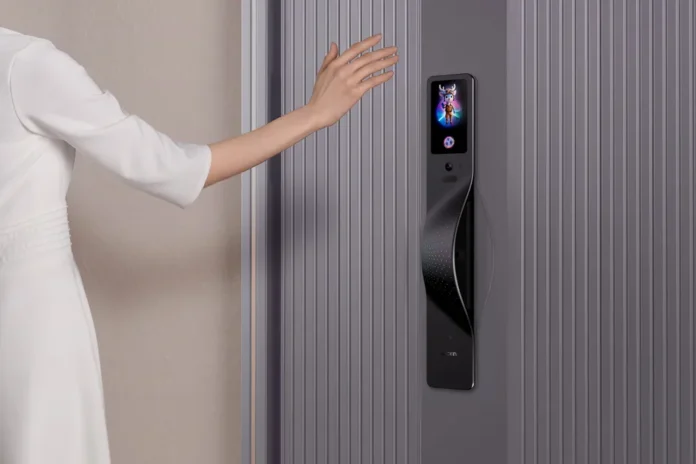
CES 2026 Smart Locks: The Shift Toward Hands‑Free Home Entry
Trendline: CES 2026 makes one thing clear: smart locks are moving beyond “phone unlock” and toward truly hands-free entry—while trying to stay secure, auditable, and family-friendly.
What “hands-free” really means in 2026
Hands-free entry doesn’t just mean unlocking without a key. It’s a bundle of improvements:
Smarter presence detection: recognizing when an authorized person is near the door
Better alerts: fewer noisy notifications; more relevant “this matters” events
Cleaner integrations: locks that actually cooperate with lights, cameras, and alarms
Reliability upgrades: faster response, longer battery life, clearer status indicators
The security tradeoff: convenience vs control
Every time a lock becomes “easier,” it risks becoming “looser.” The best direction at CES 2026 is not unlocking by default, but unlocking intelligently—paired with strong fallback options and transparent logs.
Look for these features to separate serious locks from flashy demos:
Activity logs: who unlocked and when
Granular permissions: temporary codes for guests, deliveries, cleaners
Two-factor for critical changes: especially for adding new users
Offline operation: lock should still work even if Wi‑Fi goes down
Matter and interoperability: what to watch
As Matter adoption grows, buyers increasingly expect a lock to work across ecosystems. The question isn’t only “Does it support Matter?” but “Which features are exposed through Matter vs locked to a vendor app?”
Practical advice: If you care about cross-platform control, confirm which functions work in your preferred platform (Google, Apple, Amazon, Samsung) and which require the manufacturer’s app.
Buying checklist for 2026
Power strategy: how it alerts you before battery dies
Physical override: key backup or protected emergency method
Weather resistance: especially for exposed doors and humid climates
Bottom line: CES 2026 smart locks are getting more seamless, but the best products are the ones that keep the user in charge—through logs, permissions, and predictable behavior.